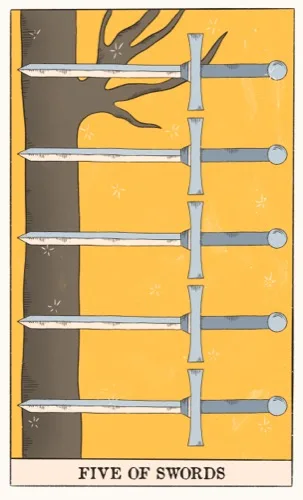
Five of Swords Tarot Card Meaning
Overview and symbolism
The rest of the Four is over, and the mind has gone back to battle. In the foreground a young man gathers up swords, holding three while two more lie on the ground at his feet. He glances over his shoulder at the others with a satisfied, almost mocking look. Behind him, two defeated figures walk away toward the water, one of them bowed with a hand raised to his face. The sky is streaked with sharp, ragged clouds, as though the wind has torn them apart. Nobody in this scene looks at peace. The winner has collected the weapons, but he stands alone; the losers have left, but they carry their resentment with them. Five is the number of disruption and strife across the Minor Arcana, and in Swords it becomes an argument in which winning the point may cost more than the point is worth.
Upright meaning
Drawn upright, this card describes conflict, disagreements and competition that have turned sour. Someone has won, or believes they have, yet the victory feels hollow. The card can reflect a win-at-all-costs attitude, in yourself or someone else: cutting remarks, point-scoring, bending the rules, or refusing to back down long after the fight has stopped mattering. It can also describe defeat and loss, being on the walking-away side of the card, feeling humiliated or betrayed. Either way, the question is not only who won. It is what the fight has done to the people involved, and whether anything worth having was gained.
Reversed meaning
The dust begins to settle in the reversed position, which often points toward reconciliation and making amends: a readiness to put the swords down, apologize, or accept that a conflict has run its course. Past resentment may still linger, though, and some readers see someone replaying an old argument long after it ended. Letting go does not require pretending the conflict never happened. It means deciding that carrying it around no longer serves you.
Love and relationships
When this card turns up in a relationship reading, it can reflect arguments where both people are trying to win rather than understand. Harsh words, silent treatments and old grievances dragged back into the present all fit the image. Ask yourself whether being right matters more to you than being close. Reversed, the card suggests a chance to repair things: to talk it through, apologize, or agree to disagree with respect. Sometimes the most loving move is simply to stop keeping score.
Career and money
Workplace politics are classic Five of Swords territory. Competition for a promotion, a dispute over credit, or a negotiation that turns into a power struggle may all come to mind. You might win the argument and lose the goodwill of your team. With money, the card points to deals where one side walks away feeling cheated, a feeling that has a way of coming back later. Some battles are better left unfought.
As advice and in yes-or-no readings
A fight you win by hurting people is not much of a win. The Five of Swords advises choosing your battles, giving up the need for the last word, and walking away from conflicts that no longer serve anyone. Asked for a yes or no, it gives a no, particularly when the plan depends on getting your way at someone else's expense.
In a daily reading
Pick your battles today. If a disagreement flares up, try lowering the stakes rather than raising them. Let a small point go, choose your words with care, and notice how much energy you save by not needing to win.
Curious what today's card says about your day?