The Hierophant Tarot Card Meaning
Overview and symbolism
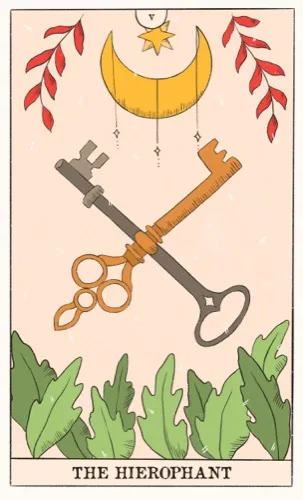
The Hierophant sits enthroned between two gray pillars, dressed in the red and white vestments of a religious teacher. He wears a triple crown and holds a staff topped with a triple cross, emblems of authority that reaches across several realms. His right hand is raised in blessing, two fingers pointing up and two folded down. At his feet lie two crossed keys, the keys to knowledge that an institution keeps on behalf of those it serves. Kneeling before him are two tonsured followers, one in robes patterned with roses, the other with lilies, receiving instruction. Where The High Priestess guards private, inner mysteries, The Hierophant teaches the shared ones through ritual, doctrine and community. His number is five, his element Earth and his sign Taurus, tying him to what is established, tested and built to endure.
Upright meaning
Tradition is the upright keynote. The card represents spiritual wisdom and belief systems held in common by a group, and it points to institutions — schools, churches, professional bodies, long-standing organizations — along with the value of learning from people who walked the path before you. Education and mentorship are central. The Hierophant can indicate a teacher, a formal course of study, or a ceremony such as a wedding or graduation. Conformity is part of his meaning too, and not always in a negative sense: sometimes following the established method is the quickest route to competence. He asks where you belong, what you believe, and which traditions give your life meaning.
Reversed meaning
Upside down, The Hierophant turns the question around: what if the rules no longer fit? This position speaks of personal beliefs, freedom and challenging the status quo. You may be questioning a tradition you grew up with, stepping away from an institution, or finding your own approach to spirituality or learning. The card supports unconventional paths, while asking whether you are moving toward something meaningful or simply pushing against authority. In some spreads the reversal also points to dogma, a structure that demands obedience without offering understanding — often the very thing that makes breaking away feel necessary.
Love and relationships
Love under The Hierophant leans toward the traditional: commitment, shared values, marriage, or a partnership recognized by family and community. It can show two people grounded in similar beliefs or backgrounds. The card may also ask whether you are following a script, dating the way you think you should, or staying within expectations that are not truly your own. Reversed, it can describe an unconventional relationship or a couple writing their own rules, which may be perfectly healthy or may simply call for an honest conversation.
Career and money
In professional life this card favors established organizations, formal training, certifications and mentors. It suits careers in education, faith-based work, public service, or any field with clear standards and a long history. Its money theme is conventional and steady rather than speculative. Who could teach you the thing you are currently trying to learn the hard way? And where might an old, proven method serve you better than inventing a new one from scratch?
As advice and in yes-or-no readings
The Hierophant counsels you to seek guidance from those with experience and to work within established frameworks. Learn the rules thoroughly before deciding whether to break them. In yes-or-no questions he usually means yes, especially when the path you are considering is the conventional, well-trodden one. If your question involves going against tradition, his answer becomes less certain.
In a daily reading
Drawn for the day, The Hierophant nudges you toward learning and belonging. Ask a mentor for input, return to a ritual that steadies you, or spend time with a community that shares your values. Notice which inherited habits are shaping your choices, and decide which of them you want to keep.
Curious what today's card says about your day?